
Traveling with Hearing Aids: A Stress-Free Guide

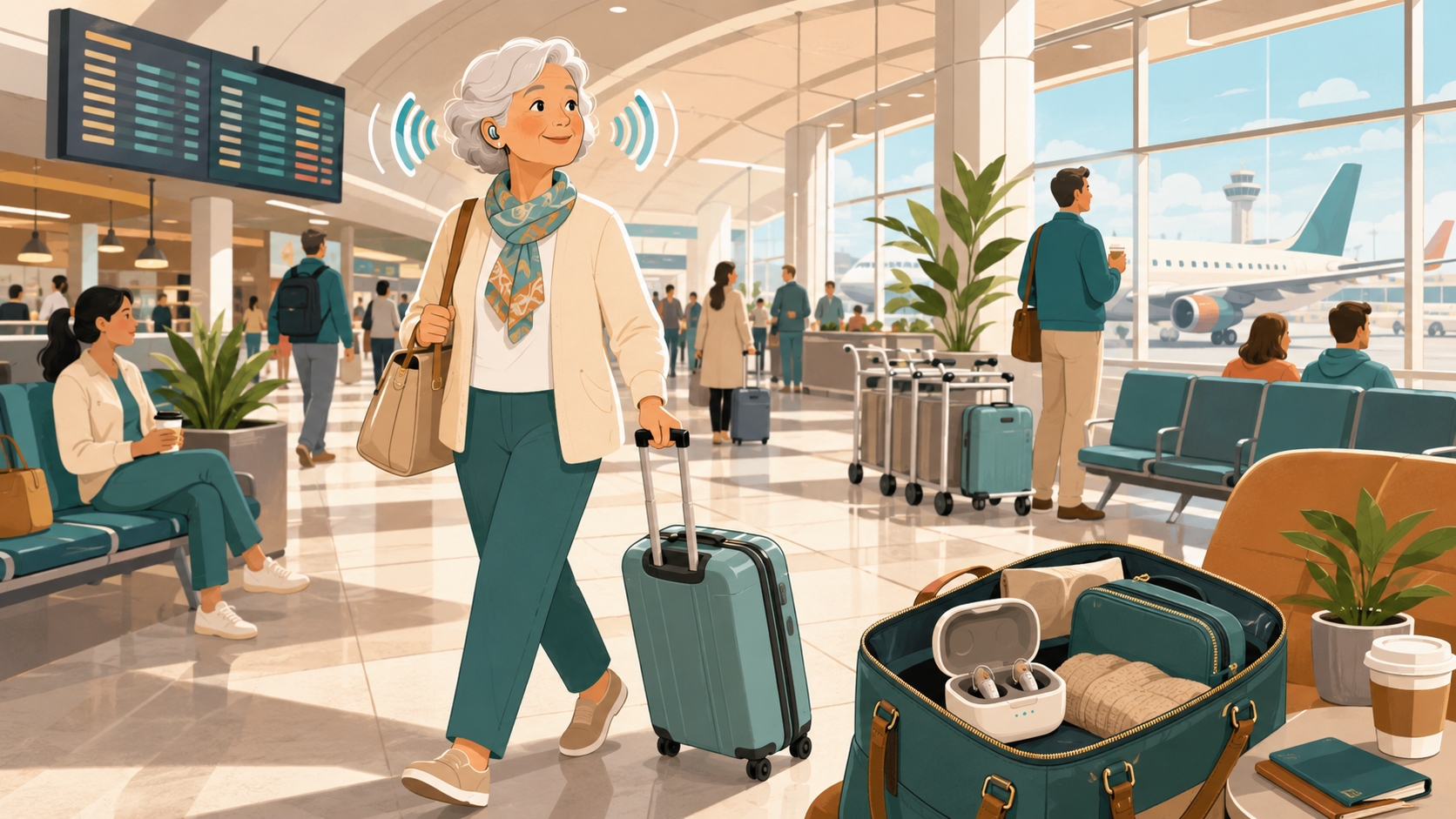
Picture yourself rolling a suitcase through an airport, en route to see grandchildren or finally take that dream cruise. You’ve checked in, looked at the departure board and inhaled the smell of coffee in the terminal. But a nagging thought keeps returning: will my hearing aids cope with the noise and hassle of travelling?
You’re not alone. Around 37% of all travellers in 2023 were over 60, and the National Institute on Deafness and Other Communication Disorders reports that 22% of adults aged 65–74 and 55% of those over 75 have disabling hearing loss. Yet fewer than a third of adults aged 70+ who could benefit from hearing aids actually use them.
If you’re one of the many older adults who wear hearing aids and love to explore, a little preparation can make travelling a joy instead of a worry.
Why Travel Poses Unique Challenges for Hearing Aid Users
Airports, train stations and busy roads present listening environments very different from your cosy kitchen. High ceilings and hard surfaces create reverberation, and announcements echo or compete with background chatter. Foreign languages, unfamiliar accents and distorted PA systems make it harder to understand speech.
Dry aeroplane cabins and humid destinations can affect your devices’ batteries and delicate circuits. If you’re driving long distances, constant engine and road noise can be tiring and make conversation difficult. Recognising these challenges helps you plan ahead and travel with confidence.
Ready to travel with confidence?
Not sure which hearing aid accessories will make your next trip easier? A quick hearing check can help you decide. You can start with Auzen’s free online hearing test, explore travel-ready hearing aids and accessories, or book a free appointment with a friendly Auzen audiologist for personalised, no-pressure guidance.
Pre-Trip Preparation: Give Your Ears a Head Start

Before you set off, take a moment to ensure your hearing aids are ready for adventure. A quick check-up with your audiologist can confirm that your devices are working at their best. If you’ve recently been fitted, practise adjusting volume and programmes in different environments.
Then think about packing. Based on advice from audiologists and travel guides, here’s a helpful checklist:
Spare batteries and chargers
You may wear your aids longer than usual on holiday. Pack at least twice as many disposable batteries as you think you’ll need. If your aids are rechargeable, pack the charging station and cable. Carry these in your hand luggage because rechargeable cases often contain lithium batteries, and some security rules restrict lithium batteries in checked luggage.
For example, Auzen lists portable options such as the Phonak ChargerGo RIC Sphere and ChargerGo RIC Infinio, which can provide up to three full recharges away from a socket. The Oticon Zeal SmartCharger combines charging, protective storage and drying. Always confirm that the charger matches your exact hearing aid model before packing.
Cleaning kit
Bring a small brush, cloth, and earwax remover to keep your devices clean. Hot weather can change the consistency of earwax, so you might need to clean your ears more often.
Dehumidifier
Humid climates or beach holidays can introduce moisture. A portable dehumidifier weighs little and protects delicate components.
Protective case
When your hearing aids aren’t in your ears, store them in a solid case. Avoid leaving them loose in a bag where they could be knocked around.
Replacement parts and user manual
Pack spare domes, wax guards and tubes, and save a digital copy of your user manual on your phone. These small items can save you from having to hunt for replacements abroad.
Accessories and apps
If you use a remote microphone, TV streamer, or smartphone app, make sure they are charged and up to date. Having control at your fingertips is invaluable in noisy environments.
Quick Travel Checklist for Hearing Aid Users
| Travel moment | Common challenge | What to prepare |
|---|---|---|
| Before departure | Device issues, low batteries or forgotten accessories | Book a check-up, clean your hearing aids, pack batteries, chargers, domes, wax guards and a protective case. |
| Airport security | Worry about scanners, queues and communication | Keep hearing aids in, tell staff if helpful, and keep batteries and chargers in your carry-on bag. |
| On the plane | Cabin noise, announcements and dry air | Use flight safe mode if needed, ask for help with announcements, and keep spare batteries or your charger close. |
| Road trips and trains | Engine noise, road hum and hard-to-follow conversation | Keep music low, take breaks and consider a remote microphone for conversations with companions. |
| Hot or humid destinations | Moisture, sweat, sand and dust | Dry aids nightly, store them in a case and pack cleaning tools, wax guards and a dehumidifier. |
Navigating Airports: Security and Boarding

Going through security with hearing aids may seem daunting, but official guidelines offer reassurance. The U.S. TSA states that you do not need to remove hearing aids or cochlear implants during security screening. Modern hearing aids contain very little metal and will not set off metal detectors; X-ray machines and body scanners do not damage them.
In fact, leaving your devices on your ears reduces the risk of losing or damaging them. To make the process smooth:
- Tell the agent you wear hearing aids. A quick, friendly mention before you enter the scanner can help security staff adjust communication and offer assistance.
- Keep supplies in your carry-on bag. Unexpected delays or layovers are less stressful when you have batteries, chargers and cleaning tools within reach. This is especially important for rechargeable aids, as lithium batteries should be kept in carry-on luggage.
- Use induction loops and visual alerts. Many airports have induction loop systems marked with a sympathetic ear symbol. Switch your aid to the “T” setting if you use a telecoil and position yourself near the sign. Some airports, such as Heathrow, offer video sign-language interpreting services around the clock. Keep an eye on display boards and ask for written instructions when needed.
- Take advantage of special assistance. Most airlines offer pre-boarding for passengers with disabilities. Use this to avoid noisy queues and give yourself time to settle. When booking, look for a “Special Assistance” section to request support.
On the Plane: Comfort, Safety and Communication
Once on board, your hearing aids remain essential tools for comfort and safety. Cabin announcements, flight attendant instructions, and conversations with seatmates are easier when you can hear clearly.
Keep your hearing aids in
Even in noisy cabins, it’s safer to wear your aids than to remove them. Keeping your devices on ensures you won’t miss important safety information. If you find the noise overwhelming, adjust the volume or programme using your hearing aid app rather than taking them out.
Use flight safe mode.
When instructed to switch devices to aeroplane mode, you can do so via your hearing aid’s app or settings. This turns off Bluetooth streaming while preserving amplification. Remember to turn streaming back on when you land.
Ask for help
Let a flight attendant or seatmate know if you may miss announcements. Many airlines offer captioned safety videos or printed safety cards; ask for these if you need them.
Manage dryness
Cabin air is dry, which may shorten the life of certain batteries. Carry spare batteries in your hand luggage and replace them if your aids start to run low.
If you use a rechargeable model such as Signia Pure Charge&Go BCT IX, Widex SmartRIC R or Phonak Audéo Infinio Ultra Sphere, remember that streaming and intensive AI processing can shorten the expected runtime. Start the day fully charged and keep the compatible charger in your hand luggage.
Ready to travel with confidence?
Not sure which hearing aid accessories will make your next trip easier? A quick hearing check can help you decide. You can start with Auzen’s free online hearing test, explore travel-ready hearing aids and accessories, or book a free appointment with a friendly Auzen audiologist for personalised, no-pressure guidance.
Road Trips and Other Modes of Travel

Traveling by car, coach, or train has its own listening challenges. Engine noise, road hum and wind can mask speech. When driving, safety is paramount, so take regular breaks and ask a companion to drive if you become fatigued.
Keep background music low to make it easier to hear conversations and external sounds. A remote microphone clipped to your companion’s collar can transmit voices directly to your hearing aids, making conversation clear even if you’re facing forward.
Compatible examples available through Auzen include the Oticon ConnectClip, GN ReSound Multi Mic, Signia StreamLine Mic and Starkey StarLink Remote Microphone+.
For single-sided hearing loss, ReSound Vivia CROS may also be worth discussing with your audiologist, as it transmits sound from the poorer-hearing side to a compatible hearing aid on the better-hearing ear.
If you’re taking a cruise or travelling by train, check whether they offer induction loop systems or captioned announcements. Many modern ships and trains provide assistive listening services. When booking excursions, tell your tour guide that you wear hearing aids so they can speak clearly or provide printed information.
International Travel and Climate Considerations
Holidays abroad often mean new climates and time zones. Heat and humidity can cause moisture build-up in your devices, while cold weather can reduce battery performance.
Dry your aids nightly.
In tropical or coastal destinations, store hearing aids in a dehumidifier each night. Wipe them with a soft cloth after swimming or showering, but never wear them in water. Avoid leaving them in a hot car or direct sunlight.
If you prefer a single device for charging and moisture care, compatible options in Auzen’s range include the Signia Dry&Clean Charger, Widex Charge & Clean mRIC RD, and Oticon Zeal SmartCharger.
Protect against dust and sand.
Use a case when at the beach and avoid handling your aids with sandy hands. Pack spare domes and wax guards because moisture or debris can clog them.
Check voltage and adaptors.
Most modern chargers are universal, but double-check that your charging station works with international voltages. Pack a travel adaptor so you can plug in wherever you go.
Manage altitude and humidity.
Cabin pressure changes can make your ears feel full. Yawning or chewing gum helps equalise pressure. In very dry climates or at high altitude, batteries may deplete faster, so carry extras.
Travel-Friendly Accessories
Packing the right accessories ensures your hearing aids continue performing at their best when you’re far from home. The Auzen accessories catalogue includes chargers, remote microphones, streaming devices and cleaning products.
According to an internal analysis of Auzen’s range, premium chargers often combine inductive charging, UV cleaning and gentle drying. Standard chargers focus on portability and usually feature built-in batteries that provide multiple recharges on the go. Wireless accessories, such as TV streamers and remote microphones, stream audio directly to hearing aids over Bluetooth or proprietary protocols. Compact care kits contain cleaning sprays, wipes and spare domes to support regular maintenance.
| Accessory type | Useful examples | How it helps while travelling |
|---|---|---|
| Portable chargers | Phonak ChargerGo products, Starkey StarLink chargers | Useful for long travel days, camping, cruises or journeys without easy access to a socket. |
| TV streamers | Phonak TV Connector, ReSound TV Streamer 2, Oticon TV Adapter 3.0 | Can stream hotel-room or cruise-cabin TV audio directly to compatible hearing aids. |
| Remote microphones | Oticon ConnectClip, GN ReSound Multi Mic, Signia StreamLine Mic, Starkey StarLink Remote Microphone+ | Can make coach journeys, museum tours, restaurants and group outings easier to follow. |
| Cleaning products | Auzen Cleaning Spray, Cleaning Wipes, Mono Care Kit, Stereo Care Kit | Support daily hygiene when you are away from your normal routine. |
Compatibility note: Most accessories are brand and model specific, so always check compatibility before ordering or packing.
If you already own a hearing aid, check whether travel-friendly accessories are available for your model. A portable charger with an integrated power bank can be invaluable if you’re camping or on a long journey without easy access to electricity. A remote microphone or streamer can make museum tours or coach journeys more enjoyable. Cleaning kits help you maintain hygiene when you’re away from your usual routine.
Staying Connected While Travelling

Hearing aids do more than amplify sound; they keep you connected to the people and experiences that make travel meaningful.
Use smartphone apps
Many hearing aids connect to mobile apps that let you adjust volume and change programmes discreetly. Before your trip, download language translation or transcription apps to read what people are saying if you’re in a foreign country. This can be especially helpful with connected models available through Auzen. Check smartphone compatibility before you leave.
Plan for group outings
On coach tours or guided walks, ask if the guide uses a microphone or audio system. If not, consider bringing your own remote mic. Some hearing aids can stream audio from a guide’s microphone directly into your ears, making commentary clear even in noisy environments.
Stay informed with written materials
Ask for printed itineraries, maps and menus. This ensures you don’t miss important details if announcements are unclear.
Communicate your needs
Let hotel staff, tour guides and travel companions know that you wear hearing aids. They can help you by facing you when they speak or repeating information.
How Auzen Supports Your Journey
At Auzen, we understand that hearing care doesn’t stop when you leave home. Every hearing aid purchased through Auzen comes with care and support.
Auzen’s ear care package includes:
- Unlimited remote fitting sessions with a qualified Auzen audiologist
- A compatible charger
- A four-year manufacturer warranty
- A 30-day money-back guarantee
- Cleaning accessories, such as earwax filters, wipes, spray and domes
Before you travel: Exact box contents and accessory compatibility can vary by model. Check the relevant product page or speak with an Auzen audiologist before you rely on a specific charger, streamer or remote microphone for your trip.
Conclusion
Travelling with hearing aids doesn’t have to be stressful. With thoughtful preparation, you can enjoy holidays, family visits and new experiences without missing a beat.
Start by ensuring your devices are in good working order, pack plenty of supplies and learn how to navigate airports and planes confidently. Use technology like remote microphones and smartphone apps to stay connected, and don’t hesitate to ask for assistance when you need it.
Remember that modern chargers, portable power banks and cleaning kits mean you can look after your hearing aids anywhere. Above all, approach your trip with curiosity and excitement. Life’s adventures are waiting.
Make your next journey unforgettable
Schedule Your Free ConsultationReady to explore with clarity and confidence? Try Auzen’s online hearing test, browse travel-ready hearing aids and accessories, or book a free appointment with an Auzen audiologist. We’re here to help you make the most of every moment.
Explore Our Full Range of Hearing AidsFAQs
Can hearing aid batteries go through airport security?
Yes. Security scanners and x-ray machines should not damage your hearing aids or batteries, and you do not need to remove your hearing aids during screening. Keep spare batteries in your carry-on bag, ideally in their original packaging.
Should I take my hearing aids out on a plane?
In most cases, no. Keeping your hearing aids in can help you hear safety information, flight-attendant instructions and conversations more clearly. If cabin noise feels overwhelming, adjust the volume or programme through your hearing aid app rather than removing them.
Can I use Bluetooth hearing aids during a flight?
When the airline asks passengers to switch devices to aeroplane mode, you can usually use flight safe mode through your hearing aid app or settings. This turns off Bluetooth streaming while preserving normal amplification. You can switch streaming back on after landing.
How can I protect my hearing aids from humidity while travelling?
Wipe your hearing aids with a soft cloth, store them in a protective case and use a dehumidifier or compatible drying charger overnight. This is especially helpful in tropical, coastal or very humid destinations.
What should I pack when travelling with hearing aids?
Pack spare batteries or your charger, a charging cable, cleaning tools, spare domes, wax guards, a protective case and any accessories you rely on, such as a remote microphone or TV streamer. Keep essential supplies in your carry-on bag rather than checked luggage.
Medical Disclaimer: This article is for informational purposes only and does not constitute medical advice. If you are concerned about your hearing, your hearing aids, ear pain, sudden hearing changes or travel-related ear symptoms, please consult a qualified audiologist or your GP.

Leave a comment
This site is protected by hCaptcha and the hCaptcha Privacy Policy and Terms of Service apply.